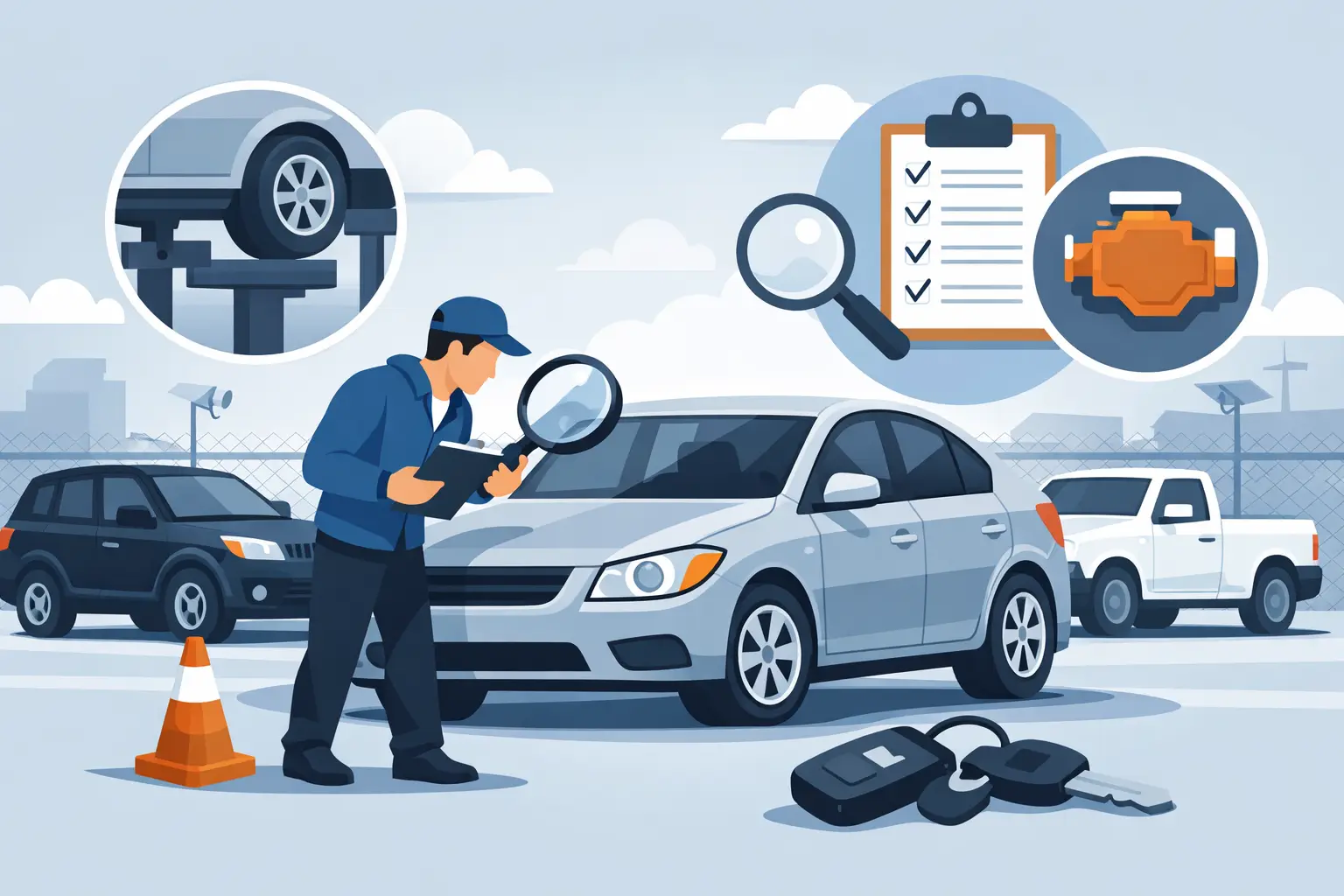
A low opening bid can make a seized car, truck, or SUV look like the best deal in the lot. But the buyers who consistently avoid expensive surprises inspect seized vehicles before bidding. At a government, police, or public auction, the vehicle may be available for only a short preview window, sold as-is, and offered with limited history. What you find before the auction starts matters far more than the number on the windshield.
Seized vehicles can come from law-enforcement actions, impound lots, abandoned-vehicle programs, or agency disposals. Some were maintained and driven regularly. Others may have sat for months, have missing keys, dead batteries, mechanical problems, or title restrictions. The auction catalog is a starting point, not a condition guarantee.
Know What the Auction Is Actually Selling
Before you inspect the vehicle, read the sale terms from the auctioning agency or its contracted auction company. Confirm whether the vehicle is listed as seized, impounded, surplus, salvage, abandoned, or parts-only. Those labels affect the questions you should ask and the paperwork you may receive after payment.
A police-seized vehicle is not automatically a clean, ready-to-drive vehicle. It may have been stored during an investigation, released after a court process, or towed after an arrest. An impounded vehicle may have been parked for an unknown period or have a mechanical problem that led to the tow. Government fleet surplus vehicles often have more predictable service use, but they can also have high mileage, extensive idling time, cosmetic wear, or equipment holes from removed radios and lights.
Pay attention to whether the listing says the vehicle runs, starts, has keys, or is sold in unknown condition. These descriptions are not interchangeable. “Runs” may reflect an observation made days earlier. “Starts” does not mean it shifts, drives, stops safely, or has no warning lights. If the listing makes no claim, assume you must verify as much as the preview rules allow.
Inspect Seized Vehicles Before Bidding With a Plan
Auction previews are often busy, and vehicles may be parked tightly in rows. Arrive early enough to walk the lot once without pressure. Bring a flashlight, paper towels, a tire-pressure gauge, a paint-depth gauge if you know how to use one, and a notebook or phone for photos where permitted. A basic OBD-II scanner can be useful, but only if the vehicle can be powered on and the auction allows scanning.
Start with the vehicle identification number. Compare the VIN visible through the windshield with the VIN on the door-jamb label and the auction paperwork when available. Look for missing labels, altered rivets, fresh paint around VIN areas, or a VIN plate that appears damaged. If anything does not match, do not guess. Ask the auction staff what documentation is available and decide whether the uncertainty is acceptable.
Then step back and examine the body from several angles. Look for mismatched paint, uneven panel gaps, overspray on trim, wrinkled metal inside the trunk or under the hood, and signs of recent repairs. These do not always mean a vehicle is a bad buy. A repaired fender may be a manageable cosmetic issue. Structural damage, flood exposure, or a poorly repaired collision can be a very different calculation.
Check for water and long-storage damage
Water damage is one of the most costly problems to miss because it can affect electronics, wiring, interiors, and safety systems long after a vehicle looks clean. Check beneath the seats, under floor mats, in the spare-tire well, and along trunk seams. Mud, silt, a musty odor, water lines, corrosion on seat tracks, or damp carpet deserve close attention.
Long storage causes its own set of issues. Tires can dry-rot or develop flat spots. Brake rotors can rust heavily. Rodents may damage wiring, insulation, and air filters. Open the hood and look for nesting material, chewed wires, leaking fluids, brittle hoses, and corrosion around the battery terminals. A dead battery is common. A dead battery combined with rodent damage and warning lights is a more expensive unknown.
Look underneath, not just under the hood
If auction rules allow it, crouch down and inspect the underside with a flashlight. Look for active fluid leaks, bent suspension components, fresh undercoating that may conceal corrosion, damaged exhaust parts, and severe rust on the frame, subframe, brake lines, or rocker panels.
Surface rust may be normal in northern states and Canadian markets, particularly on older vehicles. The question is whether the corrosion is cosmetic or has compromised structural or mechanical components. A truck with rusted brake lines, a soft frame area, or perforated suspension mounts can require more than a simple repair.
Check tire condition as well. Uneven wear can point to alignment trouble, worn suspension parts, or collision damage. Four replacement tires, mounting, balancing, and an alignment can change your maximum bid quickly, especially on a truck or SUV with larger wheels.
Assess the Interior and Electronics
A clean exterior can distract from a rough interior. Sit in the driver’s seat if access is permitted. Check the steering wheel, pedals, seat bolsters, door panels, headliner, and cargo area. Excessive wear compared with the odometer may raise questions about mileage accuracy or heavy use.
Turn the key or press the start button if the auction permits it. Watch for warning lights, listen for clicking or slow cranking, and check whether the gauges, climate controls, windows, locks, lights, wipers, backup camera, and infotainment screen respond. You may not be able to test every feature, but you can identify obvious failures.
Former police and municipal vehicles need extra attention. Removed emergency equipment can leave holes in the dash, roof, trunk, console, and wiring harnesses. High idle hours can create wear that is not obvious from the mileage alone. A retired patrol vehicle may be suitable for a buyer who understands the condition and has budgeted for repairs, but it is not the same as a privately owned commuter car with similar miles.
Do Not Confuse a Quick Start With a Test Drive
Many public auctions do not permit test drives. Some allow vehicles to be started; others do not allow keys to be handled until after purchase. Work within those rules and price the risk accordingly.
If the engine starts, listen for knocking, ticking, belt noise, exhaust leaks, or an unstable idle. Look at the exhaust for excessive smoke. If you can safely observe the transmission engagement under staff direction, note delays, hard shifts, or warning messages. Never attempt to move a vehicle unless the auction specifically authorizes it.
When no start is allowed, treat the vehicle as a non-running or unverified vehicle for bidding purposes. It may be a straightforward battery issue. It may also need an engine, transmission, fuel-system repair, or major electrical diagnosis. The difference cannot be priced with optimism.
Read the Title and Removal Rules Before You Bid
Paperwork determines whether a vehicle can be registered, rebuilt, exported, dismantled, or used only for parts. Read the listing and bidder terms for title status, liens, salvage branding, certificates of destruction, bill-of-sale requirements, and any waiting period before documents are released. Requirements vary by state, province, agency, and auction type.
Also confirm the buyer’s premium, sales tax rules, payment deadline, and vehicle-removal deadline. A vehicle that must be picked up within a day or two may require a trailer, tow company, insurance arrangements, or temporary storage. Those costs belong in your decision before you bid, not after you win.
GovernmentAuctions.org helps members research public and government auction sources by state, metro area, and ZIP code, but each auction’s current rules control the sale. Review the specific terms for the listing you plan to attend.
Set a Maximum Bid From the Real Total Cost
The right maximum bid is not based on the auction’s opening price or on what similar clean retail vehicles appear to sell for. Start with a conservative estimate of the vehicle’s market value in comparable condition. Subtract expected repairs, transport, title and registration costs, auction fees, taxes where applicable, and a reserve for problems you could not inspect.
For a vehicle that cannot be started or driven, increase that reserve substantially. For a vehicle with clear service records, a clean condition check, and a title you understand, the unknowns may be lower. It depends on your mechanical knowledge, access to repair help, local towing costs, and whether you need dependable transportation immediately.
Write your ceiling down before the bidding begins. Public auctions can move quickly, and another bidder’s enthusiasm is not evidence that the vehicle is worth more. If bidding passes your number, let it go. Another auction and another vehicle will come along.
The best auction purchase is rarely the one with the lowest hammer price. It is the vehicle whose condition, documents, and pickup requirements you understood before raising your hand. Take the preview seriously, inspect what you can, and bid only on the risks you are prepared to handle.