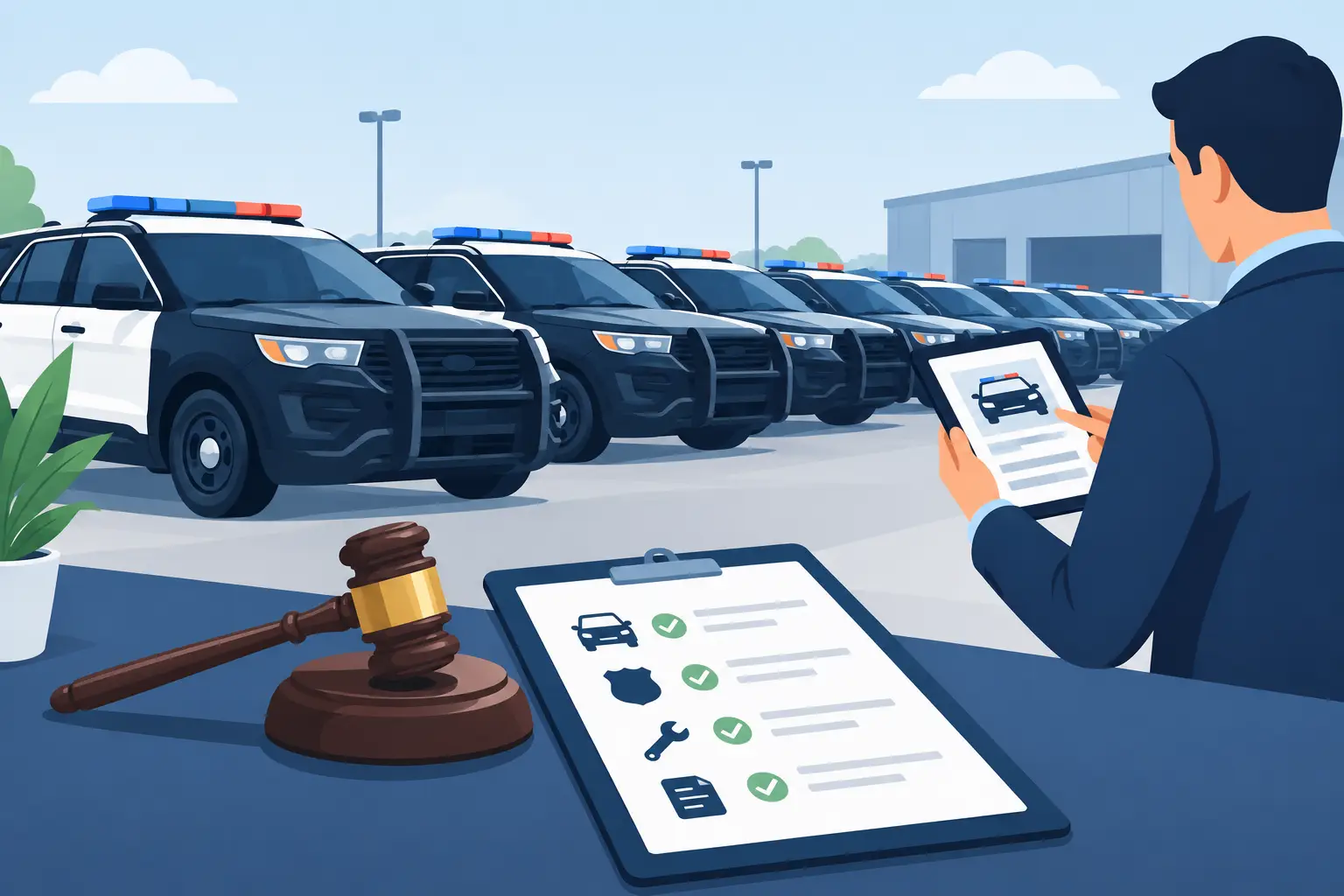
A retired patrol SUV can look like a straightforward bargain until you notice the engine hours, idle time, missing rear seat, and warning lights that appeared during a five-minute preview. Police fleet buying tips matter because these vehicles are purpose-built work tools. They may have been maintained on schedule and retired at a reasonable age, but they also may have spent thousands of hours idling, driven hard, or modified for agency equipment.
The right purchase starts before auction day. Know what type of vehicle you are looking at, read the sale terms, inspect what the auction allows, and set a total cost limit that includes more than the winning bid. A good fleet vehicle can be a practical daily driver, work truck, or project. It is not automatically a low-cost vehicle just because it came from a government agency.
Start With the Vehicle’s Actual Job
Police and municipal fleets sell more than marked patrol cars. Depending on the agency and sale, you may find administrative sedans, detective vehicles, command SUVs, prisoner transport vans, motorcycles, pickup trucks, parking-enforcement vehicles, and unmarked support vehicles. Each category has different wear patterns.
A marked patrol sedan or SUV may have accumulated relatively modest road mileage while running for long shifts. Idling powers lights, radios, computers, climate control, and other equipment. That use can affect engine wear, cooling components, battery life, alternators, belts, hoses, and transmission condition. Ask whether the listing provides engine hours or an hour-meter reading. Mileage alone does not tell the whole story.
Administrative and unmarked vehicles can be less heavily equipped and may have had easier service lives. A police pickup may be appealing to a contractor or small business, but inspect its bed, hitch, suspension, and underbody for evidence of towing, off-road use, or salt exposure. Transport vans deserve an especially close look at rear HVAC, doors, floor condition, and interior modifications.
Do not assume a recognizable police package is automatically better than a civilian version. Heavy-duty cooling, brakes, suspension, and electrical systems can be useful. On the other hand, specialized parts, altered interiors, and a rough service history can raise ownership costs. The best choice depends on how you plan to use it after purchase.
Police Fleet Buying Tips Before You Bid
Read the auction listing and terms line by line. Government and police surplus auctions commonly sell vehicles as-is and where-is. The agency or auction provider may provide a VIN, mileage, title status, condition notes, photographs, and a preview window, but the amount of detail varies widely. A listing description is a starting point, not a mechanical inspection.
Confirm the basic rules before you become attached to a vehicle. Find out whether registration is required, whether bidding is online, in person, or both, and whether a deposit, buyer’s premium, sales tax, or other fee applies. Check the accepted payment methods and the removal deadline. Some auctions allow only a short pickup period, which can create storage charges or force a hurried transport decision.
Also review title and paperwork information carefully. Many surplus vehicles are sold with a standard title, while others may have branded paperwork or documentation that requires additional steps before registration. Requirements can differ by state and by the vehicle’s prior use. Verify what documents the seller says will be supplied, then check the rules that apply where you intend to register the vehicle.
If you are buying outside your home state, factor in travel, towing, shipping, and paperwork time before bidding. A low bid in another metro area can lose its appeal when the vehicle cannot be driven home or must be collected quickly.
Check the VIN and Recall Status
Use the VIN shown in the listing to confirm that the model, year, and trim match the description. It can also help you identify whether a vehicle was built as a police package rather than simply fitted with police equipment later. Check for open recalls and review available vehicle-history information, while remembering that not every government repair or maintenance event appears in a commercial history report.
VIN research can also reveal details worth pricing in advance, such as engine type, drivetrain, towing equipment, or model-specific mechanical concerns. If a vehicle has a common transmission issue or expensive exhaust component, you want to know before your maximum bid is set.
Inspect Beyond the Paint and Decals
When an inspection day is offered, attend it. Bring a flashlight, a phone or notebook, work clothes, and a calm approach. You are not there to prove the vehicle is bad. You are there to find the work it may need and decide what that work is worth to you.
Walk around the outside first. Look for uneven tire wear, rust around wheel arches and rocker panels, leaking fluids, cracked lights, damaged bumpers, and mismatched body panels. Check the roof and trunk or cargo area for holes or patches from removed antennas, light bars, partitions, or wiring. Decal removal can leave paint fade or adhesive outlines, particularly on older marked units.
Inside, look under the dash and in the center console area. Removed radios, computers, cameras, and emergency equipment often leave brackets, cut wiring, holes, and loose trim. Confirm the rear seating arrangement if you need a family vehicle or work crew transportation. A former prisoner partition, hard rear seat, or missing seat belts may require more than a simple cleanup.
If starting the vehicle is permitted, listen for unusual noise on a cold start and watch for warning lights. Let it idle long enough to see whether it overheats or runs roughly. Test lights, windows, locks, HVAC, wipers, horn, gauges, and gear selection where allowed. Do not assume an illuminated warning light is minor because the vehicle still runs.
A short test drive is often unavailable at public auctions. That limitation is one reason to bid conservatively. If the auction does allow a drive or a mechanic inspection, use the opportunity. If it does not, base your bid on the possibility of deferred maintenance rather than the best-case scenario.
Build a Total-Cost Ceiling
Your bid is only one line in the purchase cost. Before the auction opens, write down a ceiling that includes the expected sale price, buyer’s premium, taxes and registration costs where applicable, insurance, transport, tires, battery replacement, fluids, keys, cleaning, and initial repairs. Older fleet units may also need civilian equipment installed or former-agency hardware removed.
For a vehicle you plan to resell, leave room for the time and uncertainty involved in repairs, detailing, title processing, and finding a buyer. For a personal vehicle, leave room for the first round of maintenance even if it appears to run well. A serviceable auction vehicle is not necessarily ready for a long highway trip on the day you collect it.
It helps to identify two or three comparable vehicles before sale day. Compare local private-party listings, dealer inventory, and similar fleet units, adjusting for mileage, engine hours, condition, title status, and equipment. This prevents auction momentum from turning an ordinary vehicle into an expensive one.
Bid for Condition, Not the Story
Police vehicles attract attention. Some buyers want the heavy-duty package; others are drawn to the look of a former patrol unit. Neither is a reason to exceed your number. A clean-looking SUV with no mechanical details may be riskier than a plainer unit with service records, clear photos, and a thorough condition report.
Online bidding requires the same discipline as a live sale. Watch for bid extensions near closing time and do not treat an early low price as an indication of the final price. Enter your maximum only after fees and transport are accounted for. If bidding moves past your limit, let it go. Public agencies routinely rotate fleet vehicles out of service, and another suitable unit may appear later.
GovernmentAuctions.org organizes government, police, impound, and surplus auction sources by state, metro area, and ZIP code, which can make it easier to focus on sales close enough to inspect and collect. Local searching is practical, not just convenient. Seeing the vehicle in person and avoiding long-distance transport can materially change the risk of a purchase.
Plan the Pickup Before You Win
Do not wait until after the sale to decide how the vehicle will leave the lot. Confirm the pickup dates, identification requirements, payment clearance rules, and whether temporary movement or towing arrangements are needed. Bring a trailer or arrange a transporter if the vehicle has no plates, no keys, mechanical concerns, or restrictions on driving it from the property.
At pickup, compare the VIN and vehicle condition with the auction paperwork before leaving. Collect every document supplied, including title paperwork, bill of sale, release forms, keys, and any maintenance records. Take photographs of the vehicle as collected. Then schedule a full inspection and baseline service before relying on it for daily transportation or job-site use.
The best police fleet purchase is usually the one that is a little less exciting: a vehicle you inspected, understood, could collect on time, and bought below a realistic all-in limit. Patience is not a missed opportunity at an auction. It is often what keeps a promising fleet vehicle from becoming an expensive surprise.