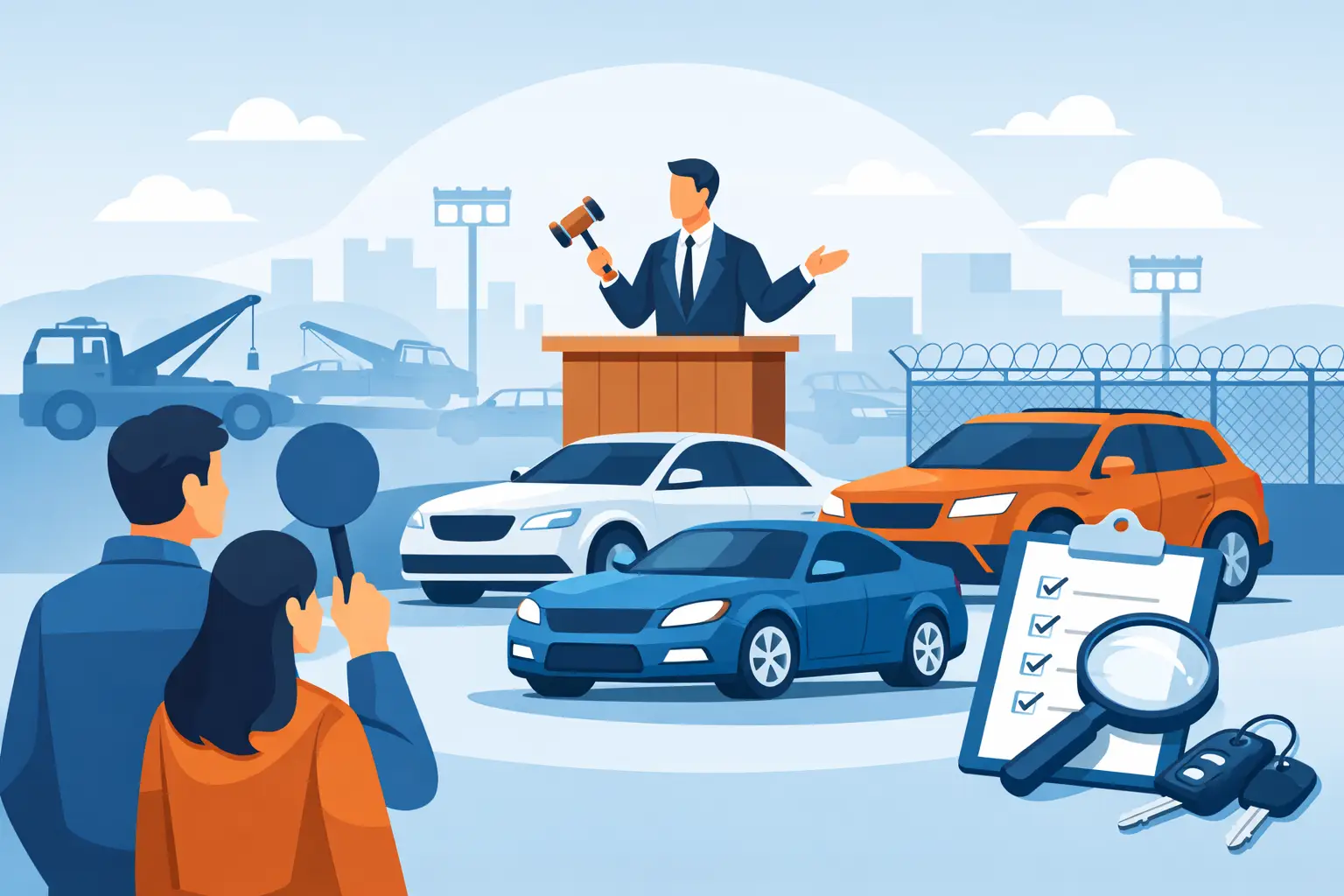
A local impound auction guide should start with one fact that catches many first-time buyers off guard: the lowest bid is rarely the full cost of taking a vehicle home. Impounded cars, trucks, motorcycles, and vans can be sold because they were towed, abandoned, unclaimed, or held after a police matter. They may offer real value, but they are usually sold as-is, where-is, with limited time to inspect and no test drive.
That does not make local impound sales a bad place to shop. It means preparation matters more than impulse. A buyer who knows the auction rules, reviews the vehicle list early, and accounts for fees, towing, repairs, and paperwork is in a much better position than someone who simply spots a low opening bid.
How Local Impound Auctions Work
A local impound auction is generally a public sale of vehicles that have been held by a police department, city agency, towing contractor, sheriff’s office, or other public authority. The exact process varies by state, county, and agency. Some sales happen in person at a storage yard. Others use online bidding, sometimes with an in-person inspection period before the auction closes.
The vehicle inventory can be unpredictable. One sale may have mostly older sedans and non-running vehicles; another may include SUVs, pickup trucks, motorcycles, commercial vans, trailers, or cars that appear ready for the road. A vehicle may have been impounded for something as simple as unpaid parking violations or an expired registration. That history does not tell you whether it is mechanically sound.
Most auctions publish basic lot information in advance, such as year, make, model, VIN or partial VIN, mileage if known, photographs, and title status. Listings can be incomplete. A missing key, dead battery, flat tire, warning light, or interior damage may not be obvious from photos. Treat every description as a starting point for your own inspection, not as a condition report.
Finding an Impound Auction Near You
The difficult part is not finding the idea of a police auction. It is finding the actual sale date, auction format, requirements, and inventory near your city or ZIP code. Local opportunities are scattered among municipal departments, county offices, contracted tow yards, and auction companies. Schedules can change, and a sale that occurred monthly last year may now be online or held only when inventory reaches a certain level.
Start with the agencies and auction sources that serve your metro area. If you are in a large market, expand your radius to nearby counties. Buyers in a smaller town may need to look at the nearest regional city, where towing lots and law-enforcement agencies consolidate more vehicles.
An independent research directory such as GovernmentAuctions.org can save time by organizing public auction sources by state, metro area, and vehicle category. The useful goal is not just to find one auction, but to build a short list of recurring sales you can monitor. Once you know which local operators regularly sell impounded vehicles, it becomes easier to plan inspections and compare inventory.
Before you register, confirm whether the sale is open to the public, whether online bidders need account approval, and whether a refundable bidder deposit or other registration requirement applies. Read the terms for that specific sale. Requirements can differ even between neighboring counties.
What to Check Before You Bid
Inspection day is where a cheap vehicle either becomes a reasonable purchase or an expensive project. Arrive with enough time to examine several lots without rushing. If the auction allows it, bring a flashlight, a tire-pressure gauge, a basic OBD-II scanner for newer vehicles, and someone who understands vehicle condition.
You usually will not be allowed to drive the vehicle. In many cases, you cannot start it, either. Still, there is plenty to check. Look at the body panels for mismatched paint, rust, collision damage, and signs of poor repairs. Check tire wear, glass, lights, seats, dashboard condition, and the undercarriage where visible. Look inside for water damage, mildew, missing components, or signs that the vehicle has been sitting for an extended period.
Open the hood if permitted. Check for leaking fluids, corroded battery terminals, cut wiring, missing parts, and improvised repairs. A clean-looking exterior does not outweigh a missing catalytic converter, major engine leak, or severe structural corrosion.
Match the VIN on the dashboard to the auction listing and paperwork when available. Also pay close attention to the title or ownership document status. Some vehicles come with a standard title, while others may be sold with a salvage title, a lien-related document, a bill of sale, or paperwork that requires additional steps before registration. The auction terms should explain what document the buyer receives, but registration rules depend on your state. Confirm what you will need before bidding.
Set a Real Bid Limit, Not Just a Vehicle Price
A practical bid limit starts with what the vehicle is worth to you in its current condition, then subtracts the costs you expect after the sale. Those costs may include the buyer’s premium, sales tax where applicable, title or registration expenses, towing, keys, tires, battery replacement, repairs, and time off work to collect the vehicle.
For example, a sedan with a $1,200 winning bid may sound attractive. But if the sale adds fees, the car needs towing because it will not start, and the tires and battery are worn out, the actual cost rises quickly. The same vehicle could still be worthwhile, but only if you accounted for those costs before the bidding began.
Choose your ceiling before the auction opens. Do not raise it because another bidder has pushed the price near your limit. Competitive bidding can make an ordinary used vehicle feel scarce. There will be more auction opportunities, and walking away is often the right decision when condition is uncertain.
Know the payment and pickup clock
Winning bidders typically must pay quickly and remove the vehicle within a stated window. Storage charges may begin if the vehicle stays beyond that deadline. Plan transportation before you bid, especially for non-running cars or vehicles with no keys.
If you expect to drive the vehicle away, do not assume you can. It may need insurance, plates or a temporary permit, a battery, fuel, air in the tires, or repairs before it is roadworthy. A tow truck or trailer can be the safer plan.
Common First-Time Mistakes at Impound Sales
The biggest mistake is bidding based on a photo and a low opening price. The second is overlooking the title status. Both can turn a seemingly simple purchase into a vehicle that takes more time, paperwork, or repair work than the buyer expected.
First-time buyers also sometimes arrive without reviewing fees and payment rules, then find that the auction does not accept their preferred payment method. Others bid on a vehicle they cannot remove by the deadline. These are avoidable problems, but only if you read the terms before auction day.
Watch for these warning signs during inspection:
- No keys, no visible title information, or paperwork described only in general terms.
- Heavy front-end, frame, flood, fire, or undercarriage damage.
- Warning lights, missing engine components, or signs of stripped parts.
- Tires that are unsafe, badly dry-rotted, or flat from long storage.
- A vehicle listed as non-running when you do not have a repair or transport plan.
None of these automatically means “do not bid.” A contractor may be comfortable with a work truck that needs tires. A mechanic may see potential in a non-running vehicle. For a buyer who needs reliable transportation this week, however, those same issues can make the lot a poor fit.
A Better Way to Approach Your First Auction
Give yourself one auction cycle to observe before making a major purchase. Watch how long bidding stays active, how much similar vehicles sell for, and which condition issues draw fewer bids. That experience helps you recognize the difference between a genuine opportunity and a vehicle that other buyers have priced cautiously for good reason.
For your first purchase, favor a vehicle with understandable condition, complete-looking paperwork, and a pickup plan you can carry out. It may not be the lowest-priced lot in the sale. It may be the one with the fewest unknowns.
Keep your search local enough that you can inspect and collect what you buy, but broad enough to compare several upcoming sales. The best local impound auction purchase is rarely the vehicle with the most dramatic opening bid. It is the one you inspected carefully, budgeted realistically, and can put to use without surprises you could have spotted beforehand.