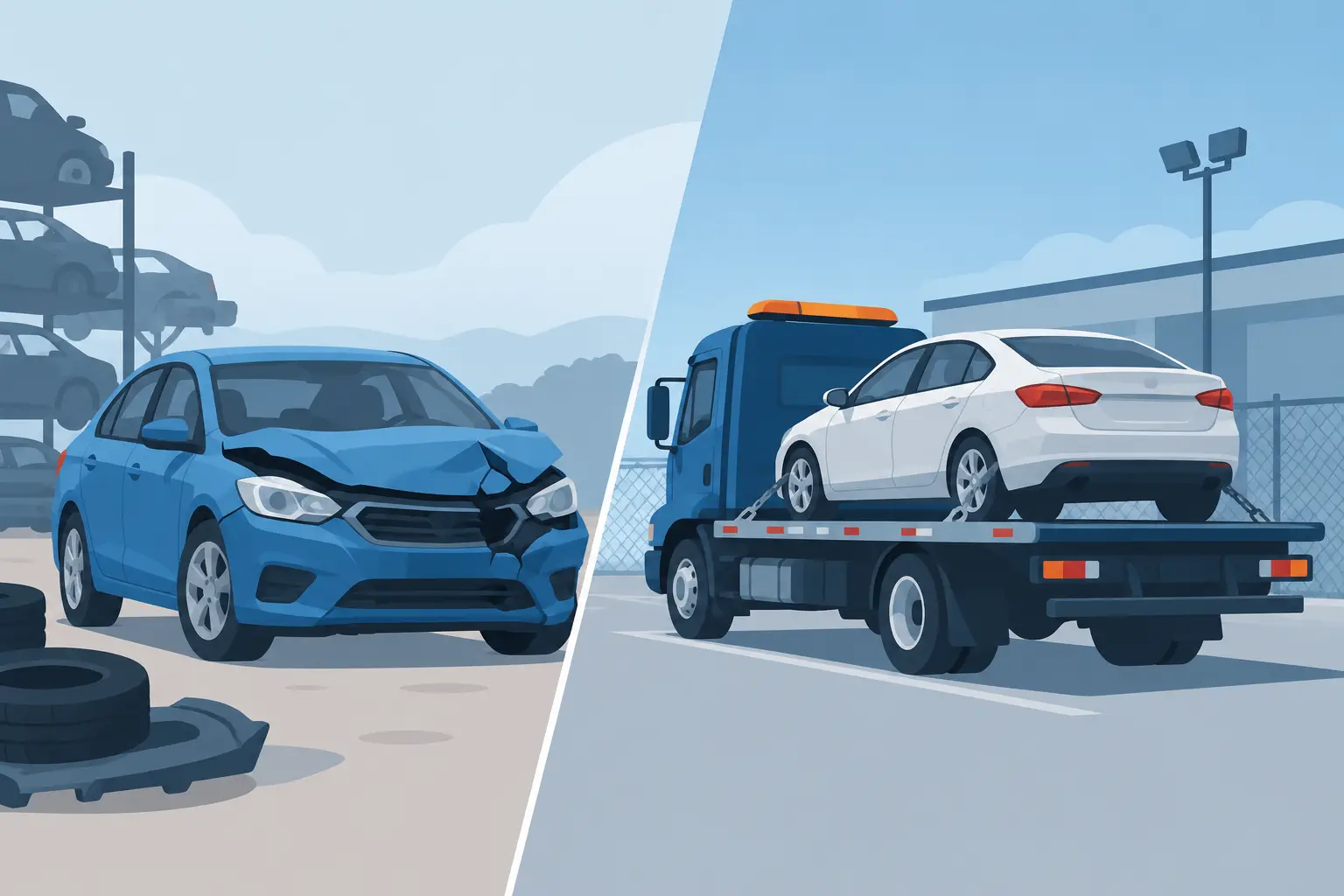
A low opening bid can make almost any auction vehicle look tempting. But salvage versus impound vehicles is not a simple choice between two kinds of bargain cars. The terms describe different things: one usually relates to a vehicle’s title and damage history, while the other describes how the vehicle entered an auction. Knowing that difference can keep you from bidding on a repair project when you actually need dependable transportation.
Salvage Versus Impound Vehicles: The Basic Difference
A salvage vehicle has been declared a total loss by an insurance company or, in some cases, assigned a salvage brand under state title rules. The reason may be collision damage, flood exposure, theft recovery, fire damage, hail, or another event that made repair uneconomical compared with the vehicle’s pre-loss value. A salvage title is a warning label, not a complete description of the vehicle’s present condition.
An impound vehicle is a vehicle taken into custody by a police department, sheriff’s office, towing authority, parking enforcement agency, or contracted impound yard. It may have been towed after an arrest, abandoned, left illegally parked, involved in a police hold, or never claimed by its registered owner. After required notices and holding periods, eligible vehicles may be sold through a public auction.
That means an impound vehicle can have a clean title, a rebuilt title, a salvage title, a lien issue, missing paperwork, or no immediately available title at all. Its impound status does not tell you whether it runs well. Likewise, a salvage vehicle may be sold by an insurance auction, a dealer, a repair shop, or a public auction. The categories can overlap, but they are not interchangeable.
What the Vehicle’s History May Tell You
With a salvage vehicle, the first question is what caused the title brand. A late-model SUV with repairable front-end damage is a very different purchase from a flood-damaged sedan with corrosion in the wiring and interior. Auction descriptions may identify the loss type, but descriptions are often brief. Photos can show panel damage, deployed airbags, missing wheels, or water lines, yet they cannot confirm the condition of the engine, transmission, safety systems, or electronics.
A vehicle marked as rebuilt, reconstructed, or revived has generally gone through a state process after salvage repairs. Requirements vary by state, and a rebuilt title does not mean the vehicle is equivalent to one with a clean history. It means the vehicle was repaired and met the applicable process for returning to the road. Buyers should understand the exact title wording before bidding, especially if they expect to register or insure the vehicle soon after purchase.
With an impound vehicle, history is often less complete. The owner may have left no service records, spare keys, manuals, or explanation of recent mechanical problems. An unclaimed pickup might be in excellent operating condition with overdue parking tickets. Another might have been abandoned because it needs a major repair. The auction source may list an odometer reading, key status, or whether the vehicle started when received, but those details are observations, not promises about its roadworthiness.
Police-seized vehicles are another category buyers sometimes group with impounds. They may be sold through similar channels, but a seized vehicle was typically taken through a legal enforcement process rather than an ordinary tow. The available documentation, release timing, and sale procedures can differ by agency.
Title Paperwork Matters More Than the Opening Bid
Before bidding, read the auction terms for title status, release documents, taxes, buyer fees, and removal deadlines. A vehicle with a low bid can become expensive if it needs towing, storage, repairs, inspections, or paperwork before it can be registered.
At an impound auction, the selling agency may provide a title, an auction bill of sale, a certificate of sale, or other ownership documents. What you receive depends on the jurisdiction and the vehicle’s status. Some lots may be sold for parts, export, dismantling, or off-road use only. Others may have title processing still underway. Do not assume you can drive any auction car home or transfer it at the motor vehicle office the next day.
For salvage vehicles, confirm whether the title is salvage, rebuilt, parts-only, or another designation recognized by the state where you plan to register it. State motor vehicle agencies set their own requirements, and insurance availability can also vary by insurer and title brand. If the paperwork is unclear in the listing or auction terms, treat that uncertainty as part of the risk rather than filling in the blanks yourself.
A vehicle identification number check can help you compare the paperwork with the vehicle in front of you. Make sure the VIN on the dashboard, door area, and documents matches where accessible. Signs of a missing VIN plate, altered labels, or inconsistent documents deserve caution.
Inspection Is Where Buyers Separate Opportunity From Guesswork
Public auction vehicles are commonly sold as-is, where-is. There may be no road test, no lift inspection, and no opportunity to connect a diagnostic scanner. Some facilities offer a scheduled preview, while others limit access to viewing from outside the vehicle. Follow the rules and make the most of the time you get.
Start with the basics. Check whether there are keys, look at the body panels for uneven gaps and fresh paint, inspect the tires, and look beneath the vehicle for visible leaks or hanging parts. Inside, watch for a musty odor, silt under carpeting, corrosion around seat mounts, or moisture in lights – all possible signs of water exposure. On a salvage vehicle, pay particular attention to airbag covers, seat belts, radiator support damage, suspension pieces, and the area behind damaged panels.
For an impound vehicle, clues about neglect can be just as useful as collision clues. A dead battery alone may be minor. Old fuel, flat tires, cracked hoses, warning lights, rodent damage, or a locked vehicle with no keys can point to a more involved project. If the auction allows it, bring a flashlight and a knowledgeable mechanic or body-shop professional. If it does not, bid as though the vehicle has unknown mechanical needs.
Set a Bid Limit That Includes the Work After the Sale
The winning bid is only one part of your cost. Add the buyer’s premium or administrative fee, sales tax where applicable, title and registration expenses, towing, a battery or keys if needed, immediate safety repairs, and the cost of parts or labor. On a damaged vehicle, include a realistic allowance for problems that are not visible during a preview.
This is especially important with salvage vehicles. Bodywork, paint, sensors, airbags, alignments, and calibration can add up quickly. A vehicle that appears to need a bumper may also have damage to cooling components or structural mounting points. For impound vehicles, the surprise may be a transmission problem, a missing catalytic converter, or months of deferred maintenance.
Decide your maximum all-in number before bidding starts. If bidding passes it, let the vehicle go. Public auctions regularly offer more inventory, and the right purchase is often the one you can inspect, transport, and document with confidence.
Which Type Fits Your Situation?
An impound vehicle may suit an everyday buyer who wants a chance at a car with a potentially clean title and is willing to accept limited history and as-is conditions. It is still best for buyers who can arrange a tow and have funds set aside for maintenance. A clean title, when available, does not replace an inspection.
A salvage vehicle may make more sense for a buyer with repair experience, access to qualified body or mechanical work, or a specific plan for a parts vehicle. It can also appeal to buyers who understand the title process and have carefully priced the repair scope. For a first-time buyer who needs reliable transportation immediately, salvage is usually the higher-risk route.
The best choice depends less on the auction label and more on the specific lot: its documents, visible condition, location, fees, removal requirements, and your ability to handle the next steps. GovernmentAuctions.org helps members locate government, police, impound, and surplus vehicle auctions by state and metro area, making it easier to compare sales close enough to inspect in person.
Before you raise your hand or tap the bid button, read the lot details one more time, confirm the pickup deadline, and picture the vehicle after the auction gate closes. A careful buyer does not just look for a low price. They look for a vehicle whose paperwork, condition, and required work all make sense together.