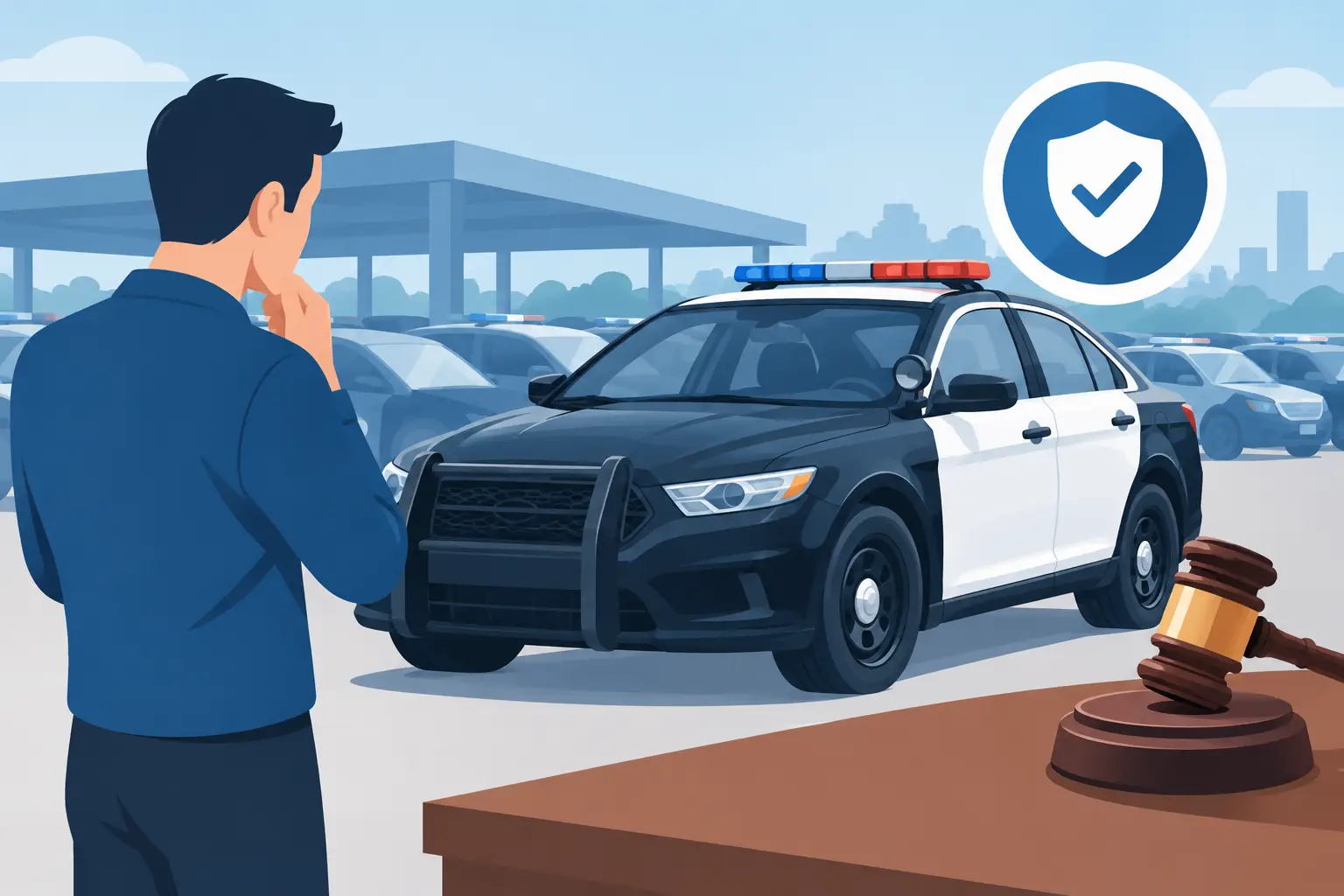
A sedan with a clean-looking body and a low opening bid can draw a crowd at a police auction. But the question that matters is not whether the car came from law enforcement. It is whether you can verify enough about its condition, title, and repair needs before you bid. So, are police auction cars safe? Some are perfectly usable vehicles. Others are inexpensive because they carry real mechanical, paperwork, or transportation risk.
The safest approach is to treat every vehicle as an individual purchase. A police impound lot, sheriff’s sale, city surplus auction, or seized-property auction can all have different rules and very different kinds of cars. The source tells you where the vehicle came from. It does not certify that the vehicle is road-ready.
Why Police Auction Cars Can Be a Good Buy
Police auction vehicles generally come from one of three channels. Impound vehicles were towed after parking violations, arrests, accidents, abandonment, or expired registration. Seized or forfeited vehicles may have been taken through a law-enforcement process. Government surplus vehicles are former fleet units used by cities, counties, agencies, schools, or public departments.
That difference matters. A retired municipal sedan may have maintenance records, marked equipment holes, high idle hours, and a known service history. An impounded personal vehicle may have been parked for months with a dead battery, missing keys, or an owner who simply could not retrieve it. A seized vehicle may look attractive but still need careful title and condition review.
The opportunity is real because public auctions are designed to move property, not prepare it for retail sale. Vehicles are often sold in the condition received, with limited descriptions and no dealer-style reconditioning. That can create lower bids, but it also puts the inspection work on the buyer.
Are Police Auction Cars Safe? It Depends on What You Verify
“Safe” has two meanings at an auction. First, is the car mechanically safe enough to drive after purchase? Second, is it safe financially and administratively – meaning you can obtain the required paperwork, insure it, register it, and handle the repairs without turning a low bid into an expensive surprise?
No auction listing can answer every question. Many vehicles are sold as-is, where-is. The engine may start during preview, but that does not prove the transmission shifts correctly under load, the cooling system holds pressure, or the car will pass a state inspection. A clean interior does not rule out flood damage, prior collision repairs, electrical issues, or a neglected service schedule.
On the other hand, “as-is” does not automatically mean “bad.” It means you need to bid based on what you can see, document, and afford to address. Buyers who have a mechanic, body-shop contact, towing plan, or experience with a particular model are often better positioned to judge risk than someone expecting a turnkey car.
The Vehicle’s Source Changes the Risk Profile
A former police cruiser deserves a different inspection than a privately owned impound vehicle. Patrol vehicles can have substantial engine idle time that is not reflected by the odometer. They may also have drilled mounting points, wiring changes, worn driver seats, and suspension wear from regular curb and road use. Still, a well-maintained fleet vehicle can be a practical choice when its condition, mileage, and service history make sense.
Impounded vehicles can be more unpredictable. Some were running when towed and need little beyond a battery and routine maintenance. Others may have been abandoned because of a costly breakdown. If keys are missing or the vehicle cannot be started, price it as a non-running vehicle, even if the body looks good.
What to Check Before You Bid
The preview period is where smart auction buying happens. Show up early, read the auction terms, and inspect without assuming you will have time to diagnose everything. If the auction allows it, bring a flashlight, tire-pressure gauge, code reader, and a friend or mechanic who knows what to look for.
Pay particular attention to these areas:
- Title status and VIN: Confirm whether the vehicle has a clean, salvage, rebuilt, lien-sale, bonded, or other title designation. Match the VIN shown on paperwork to the VIN plate on the vehicle. Requirements for registration vary by state.
- Starting and running condition: Listen for rough idle, smoke, warning lights, overheating, fluid leaks, or unusual noises. If the vehicle cannot be started, do not assume the fix is minor.
- Tires, brakes, and suspension: Uneven tire wear, bald tread, a sagging corner, or visible leaks can signal immediate work. These items add up quickly on older vehicles.
- Body and water damage: Look under carpets, in the trunk, around door seals, and under the hood for mud lines, corrosion, mildew, fresh overspray, mismatched panels, or loose wiring.
- Keys, equipment, and removal needs: Verify how many keys are included and whether the vehicle must be removed on auction day or within a short pickup window. Budget for towing if it is not roadworthy.
Photograph the vehicle and its lot information during preview if the rules permit. Pictures give you time to compare condition notes before bidding begins, especially when several similar cars are up for sale.
Read the Auction Terms as Carefully as the Car
Auction terms are not background reading. They tell you what is included, which fees apply, when payment is due, how long you have to remove the vehicle, and what documents you will receive. They may also explain whether a title is available immediately, mailed later, or handled through a state process.
Do not confuse an auction receipt with a title. Depending on the type of sale and local rules, you may receive a title, bill of sale, lien paperwork, or other transfer documents. Review your state motor-vehicle requirements before bidding, particularly if you are buying across state lines or considering a vehicle with a branded title.
Also account for costs beyond the winning bid. Buyer fees, sales tax where applicable, towing, locksmith service, batteries, tires, registration, inspection, and initial repairs can all change the real purchase price. Set a total limit before the auction starts, not after a bidding contest gets moving.
A Practical Bidding Method for First-Time Buyers
Begin with vehicles you can inspect and collect locally. A nearby auction makes it easier to attend preview, avoid surprise transport costs, and return with the right equipment if the car needs to be towed. Searching by state, metro area, or ZIP code is often more useful than chasing a low opening bid several hours away.
Pick one or two models with parts availability and repair costs you understand. Research common problems for the model year, then estimate a cautious repair allowance. If you find a similar vehicle at retail for a given price, remember that retail vehicles may have been cleaned, repaired, titled, and inspected before being offered for sale. Your auction bid should reflect the extra work and uncertainty.
At the sale, bid calmly and stop at your number. Another vehicle will come up. The buyer who walks away from a questionable car has not missed a deal – they have avoided paying for a problem they could not verify.
When a Police Auction Car Is Not the Right Choice
Police auctions are not ideal for every buyer. If you need dependable transportation immediately, cannot afford repairs, have no alternate transportation, or are uncomfortable with as-is sales, a retail purchase with a complete pre-purchase inspection may fit better.
They are also a poor place to make assumptions. Never bid because a vehicle “probably just needs a battery,” because the odometer is low, or because a similar model sells for more elsewhere. Buy only when the title path is clear, the visible condition supports your budget, and you have a plan for pickup and repairs.
GovernmentAuctions.org helps buyers research public vehicle auctions by location, so you can compare upcoming sources and review the process before committing to a sale. The useful bargain is not necessarily the cheapest car in the lane. It is the one whose risks you understood before the auctioneer called it sold.